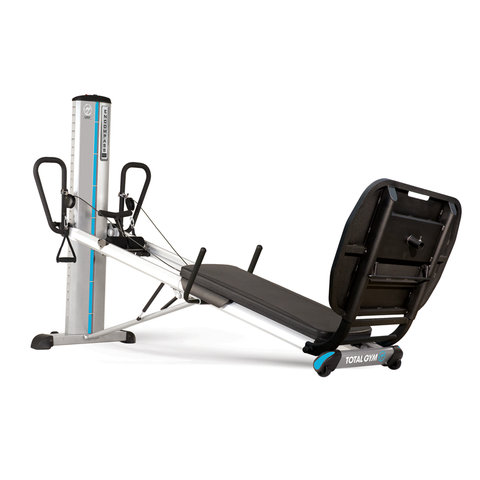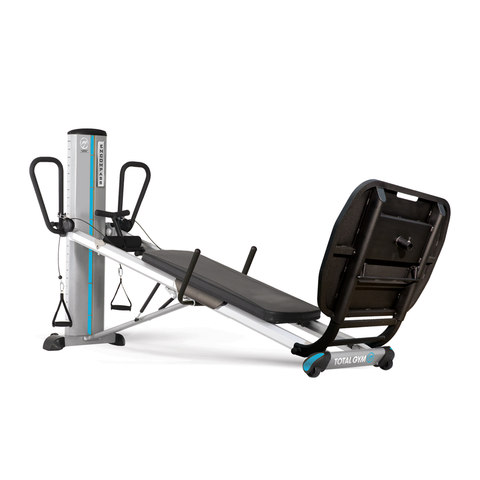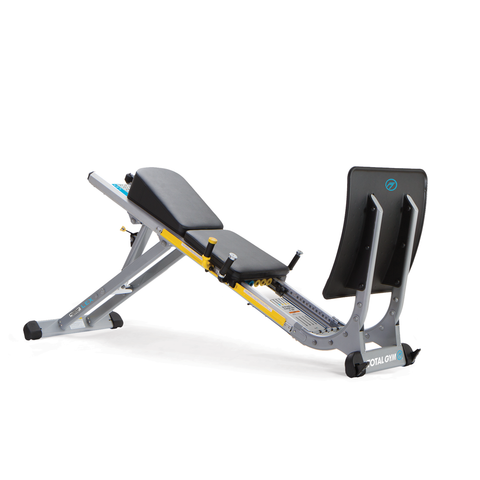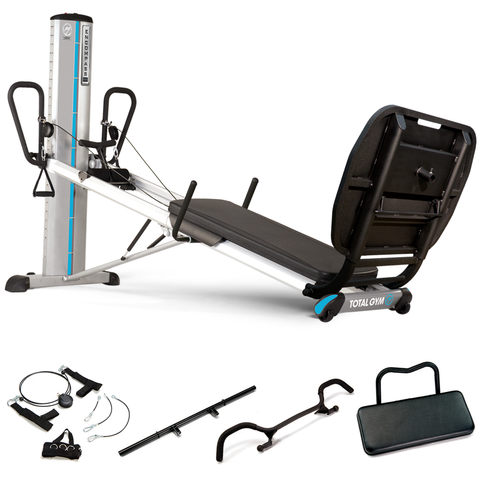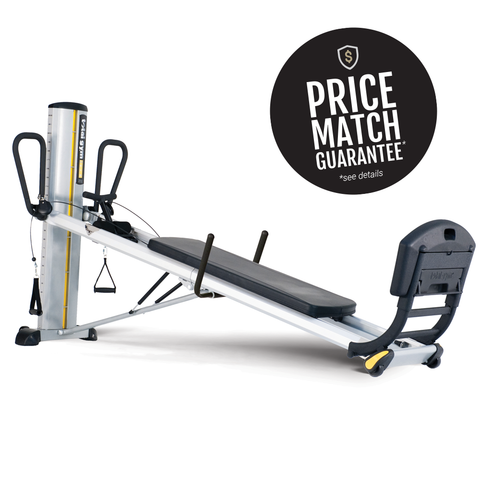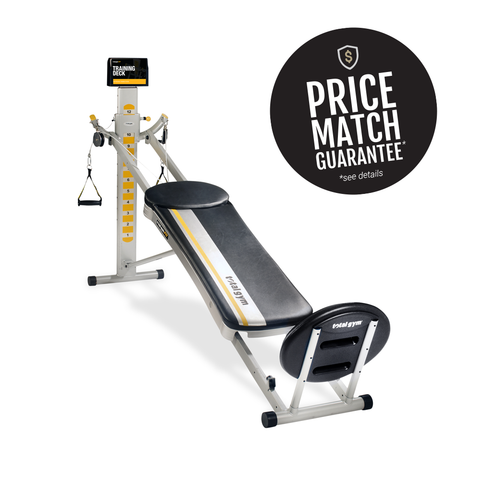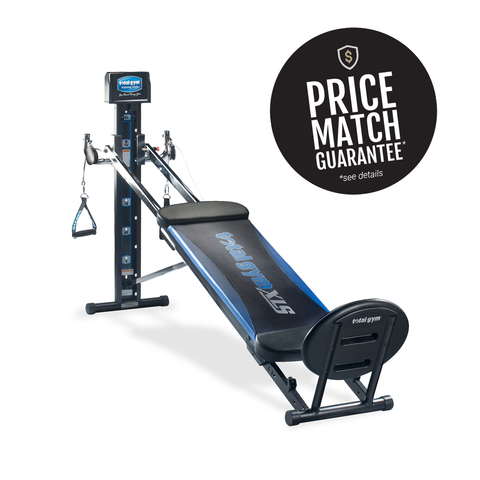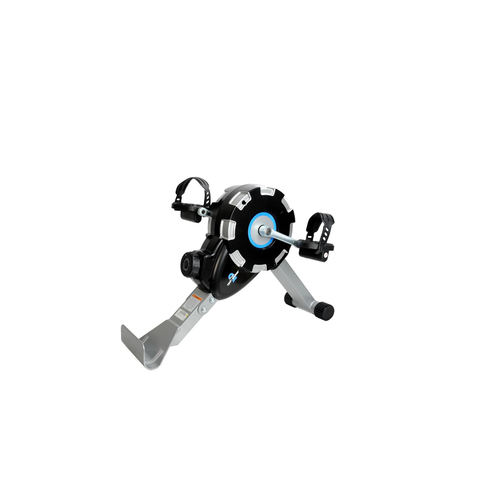

Even therapists and athletic trainers who have used Total Gym® in a clinical setting have questions about the principles behind incline-plane, body-weight, resistance training. Please review these frequently asked questions. If you have a question that remains unanswered, contact one of our qualified product consultants at sales@totalgym.com.
Q. What is the efi Sports Medicine® view on the importance of functional exercise?
A. Functional exercise is the best way to train for improved functional performance and strength. It recreates, within the context of the exercise, real life movements in real life positions, preparing your patients and clients for the day-to-day activities of daily living (ADL). On Total Gym it allows functional, partial-weight bearing exercise early in the rehab process. In athletic training, it lays a foundation for sport specific training and improved overall performance, proprioception and agility. Functional exercise emphasizes natural movement patterns so patients can move objects, including their own body, through space easily and quickly. Total Gym®, Total Gym PowerTower® and GTS® are each designed to provide functional exercise.
back
Q. How does resistance calibration work with Total Gym’s incline?
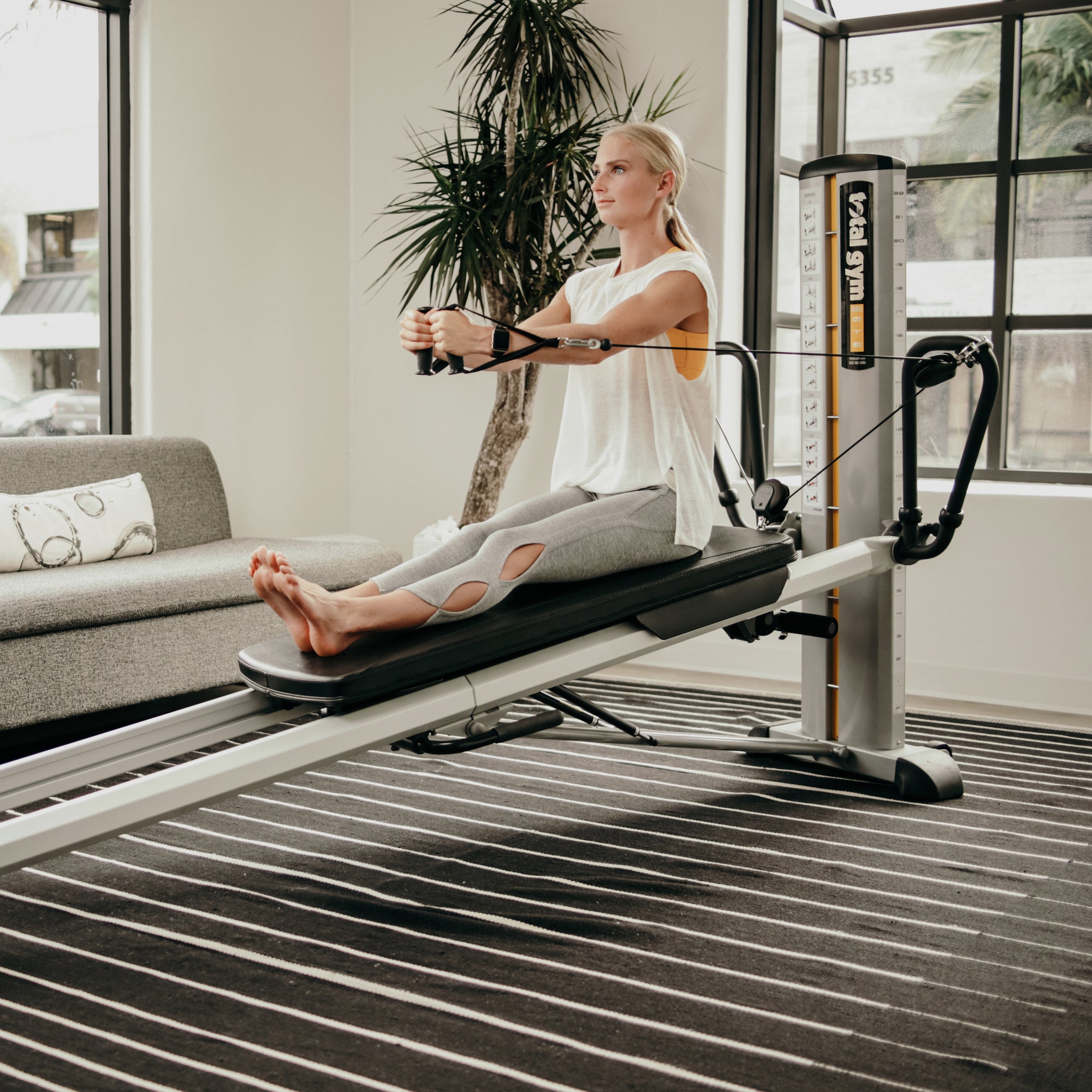
A. Total Gym is calibrated to the constant pull of gravity and lets you assess progress with precision. On Total Gym, the user’s bodyweight plus the weight of the glideboard and any added plate weights factored with the angle of the incline determines the calibrated load. Fortunately, efi calculates this for you on each Total Gym and GTS model, and provides a chart for your convenience.
back
Q. Why is calibration important?
A.Calibrated levels of resistance are reproducible and accurate. Accurate means they are true to national and international standards of weights and measures. Therapists needing to assess and report patient outcomes need calibration as a tool for measuring progress. Athletes, likewise want and need to know the amount of resistance in use during exercise. Calibrated resistance is repeatable, on the same machine from one use to the next use, and from one like machine to another.
back
Q. What happens when I change resistance levels?
A. You incrementally and measurably increase or decrease the load. On Total Gym, your bodyweight plus the weight of the glideboard and any added plate weights factored with the angle of the incline determines the calibrated load. Fortunately, efi calculates this for you on each Total Gym and GTS model. Incrementally measurable changes in load help you provide an effective route toward improvement for your patients or clients.
back
Q. How does the incline plane, body-weight resistance differ from a spring or tension driven resistance mechanism?
A. A constant load is the difference. With spring or tension-type equipment, resistance progressively gets greater throughout the range of motion. The muscles adapt accordingly, remaining weaker at the beginning range of motion and getting stronger at the end range. This can create an imbalance in the muscle, which needs full strength at both the beginning and end range of motion to function properly—especially in simple tasks like standing up from a squat position or lifting a heavy sack of groceries. With the Total Gym the force of gravity creates a constant load throughout the exercise, from the beginning to the end range of motion, thereby allowing the muscles to adapt to the functionality needed in real life activities. With the dynamic pulley system in use, the angles created by the location of the pulleys can cause a small progression in load, however it is so indistinguishable that the muscles still adapt as though the resistance does not change during the exercise. The quality of the exercise remains consistent.
back
Q. What difference does a dynamic pulley system make?
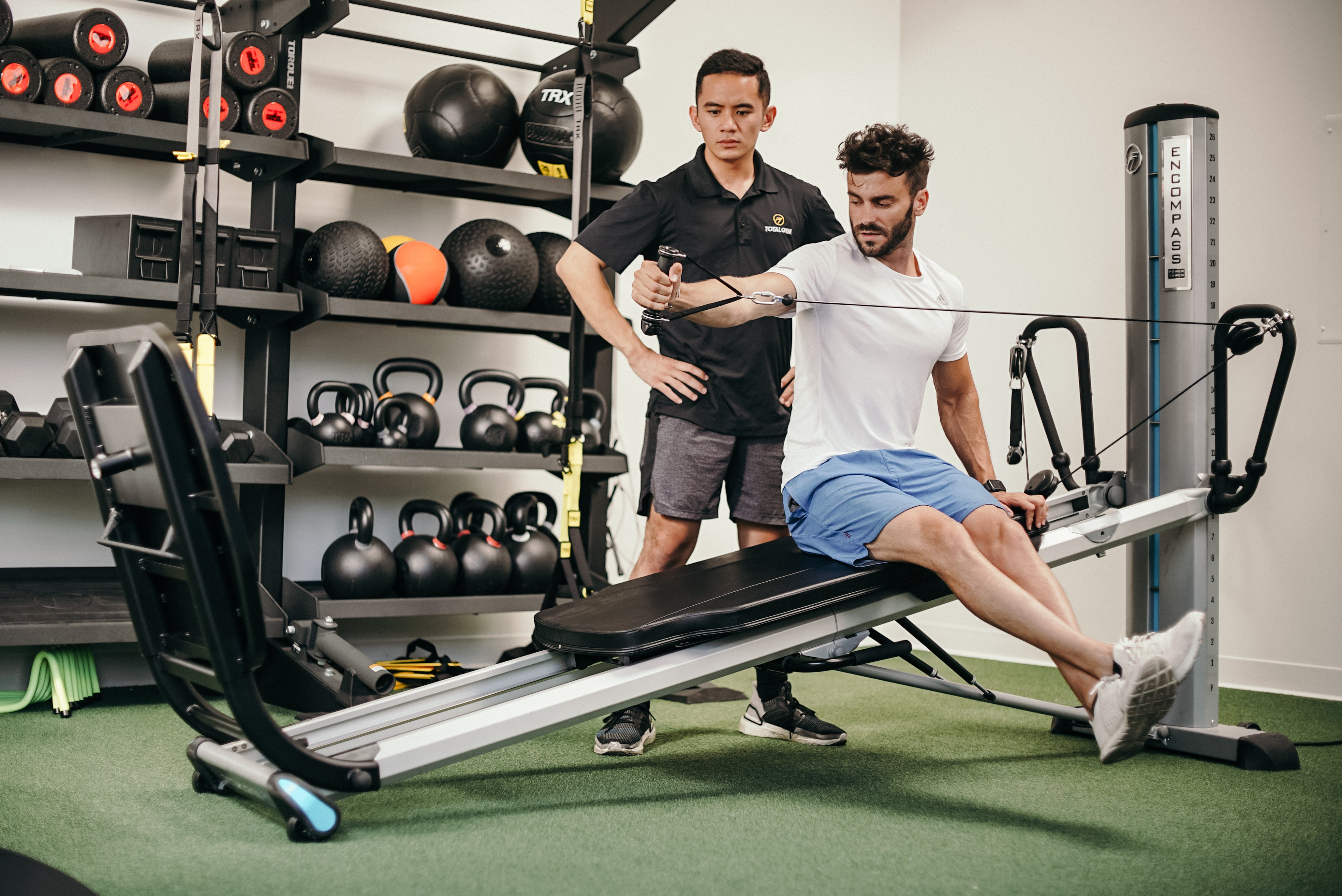
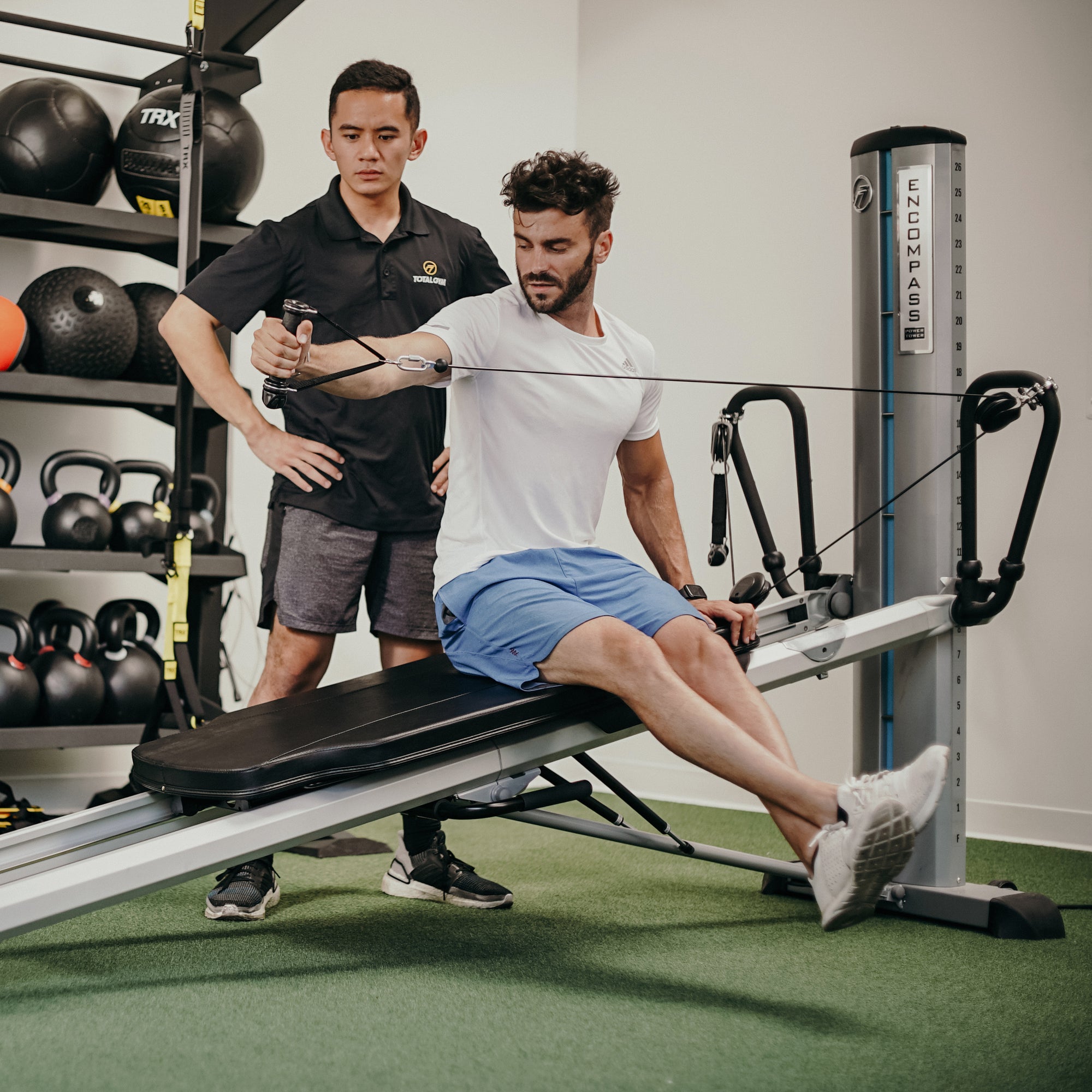
A. The dynamic pulley system offers unilateral, bilateral and cyclocentric movement patterns in upper body exercises. The Leg Pulley System offers the same dynamic. Patients and clients can exercise both arms bilaterally, one arm at a time, alternate unilaterally and cyclocentric exercise initiates a cycle of continuous eccentric and concentric load simultaneously in a static position on the glideboard.
back
Q. Does Total Gym provide low compression exercise?
A. Yes. Patients achieve the benefits of each Total Gym exercise with minimal joint compression at every level of function. The back is fully supported on the glideboard. Additionally, the lever length of the body, positioned on an incline, along with the line of pull minimizes any skeletal compression that would normally occur during exercise using external weights. The load never directly compresses the skeletal structure. This also helps reduce the risk of injury.
back
Q. How does exercise on Total Gym accommodate a full range of motion of the joint?
A. Total Gym’s free-rolling glideboard and dynamic pulley system allow unrestricted movement of the joints. If a clinician wants to restrict the free movement of a joint, Total Gym has a regulator attachment (Slide Distance Regulator) that restricts the movement of the glideboard so that the range of motion can be controlled.
back
Q. How does Total Gym utilize the three cardinal planes of movement and multi-plane movement?
A. Since Total Gym utilizes the participant’s body as the load, it does not lock the exerciser into any position or course of movement. Instead, it encourages the body to move within each of the planes of motion— frontal, sagittal and transverse. Or, one can even exercise in multi-plane movements. The great thing about Total Gym— it is as versatile as the exerciser’s or clinician’s imagination.
back
Q. How does exercise on Total Gym recruit the core muscles of the trunk?
A. Because Total Gym utilizes the one’s body weight as the load, on a free-rolling, unstable glideboard, one is forced to respond proprioceptively to the stimuli of the glideboard. And that forces the user to maintain balance in all upright positions, so the muscles of the core are engaged no matter what the focus of the specific exercise. The use of many muscle groups in synergy, performing movements that require balance and stabilization, focus results to the stomach and the back.
back
Q. How does Total Gym enhance proprioception?
A. The patient or exerciser must react to the stimulus of the rolling glideboard in every exercise. And the glideboard is not external to the participant; the participant is on the glideboard, literally giving themselves a ride—no different than when one reacts proprioceptively everytime the car turns or the train rocks. When patients perform sequences of movement that challenge their balance, they gain improved control and spatial awareness. This type of proprioceptive enhancement occurs naturally with every exercise on Total Gym.
back